
For many Canadian RVers, the road heads south: a winter in the sun, a national parks loop, or a long trip down the coast. The one thing that catches almost everyone out isn't the distance. It's the money. When your income and savings are in Canadian dollars and your spending is in US dollars, the exchange rate quietly reshapes your budget every time you fuel up.
Here's how to plan and track a cross-border RV trip so you always know where you stand.
Why cross-border trips blow budgets
You think in one currency and spend in another
A campground listed at $60 sounds like $60. It isn't. Once you convert it, and add your card's foreign transaction fee, it's noticeably more in Canadian dollars. Multiply that across fuel, groceries and campgrounds for weeks or months, and the difference adds up fast.
Exchange rates move
The rate on the day you plan isn't the rate on the day you spend. Over a long trip, even a modest move changes the total.
Fees hide in the small print
Foreign transaction fees on credit cards, ATM fees and currency conversion at the point of sale all add up. Some cards charge no foreign transaction fee, so check yours before you go.
How to build a cross-border budget
1. Budget in the currency you'll spend
Estimate your US costs in US dollars, since that's what the prices are. Campgrounds, fuel (priced per gallon, so convert carefully from litres), groceries, attractions and park passes all go in USD.
2. Convert to Canadian dollars with a buffer
Convert the total into Canadian dollars at today's rate, then add a buffer for exchange rate moves and fees. A buffer of a few percent is a sensible starting point for a long trip.
3. Don't forget the Canadian side
Your costs at home don't stop when you leave: insurance, phone plans, storage, any bills at home. Include them so the budget reflects your whole financial picture.
4. Check entry, insurance and health coverage requirements
Before any long trip south, check current border entry requirements, your travel medical insurance, and your provincial health coverage rules for time out of province. They change, and the costs belong in your budget.
On the road: track in both currencies
The most useful habit on a cross-border trip is logging every expense in the currency you paid and seeing it converted into your home currency. That way you see your real spending, not the number on the receipt.
- Log as you go. It's easier to log a fuel stop at the pump than to reconstruct a week of spending from card statements.
- Watch plan vs actual. Compare what you're spending with what you planned, by category, so you can adjust early.
- Keep receipts. For big purchases, a photo of the receipt is all you need.
How Ready2Roam helps
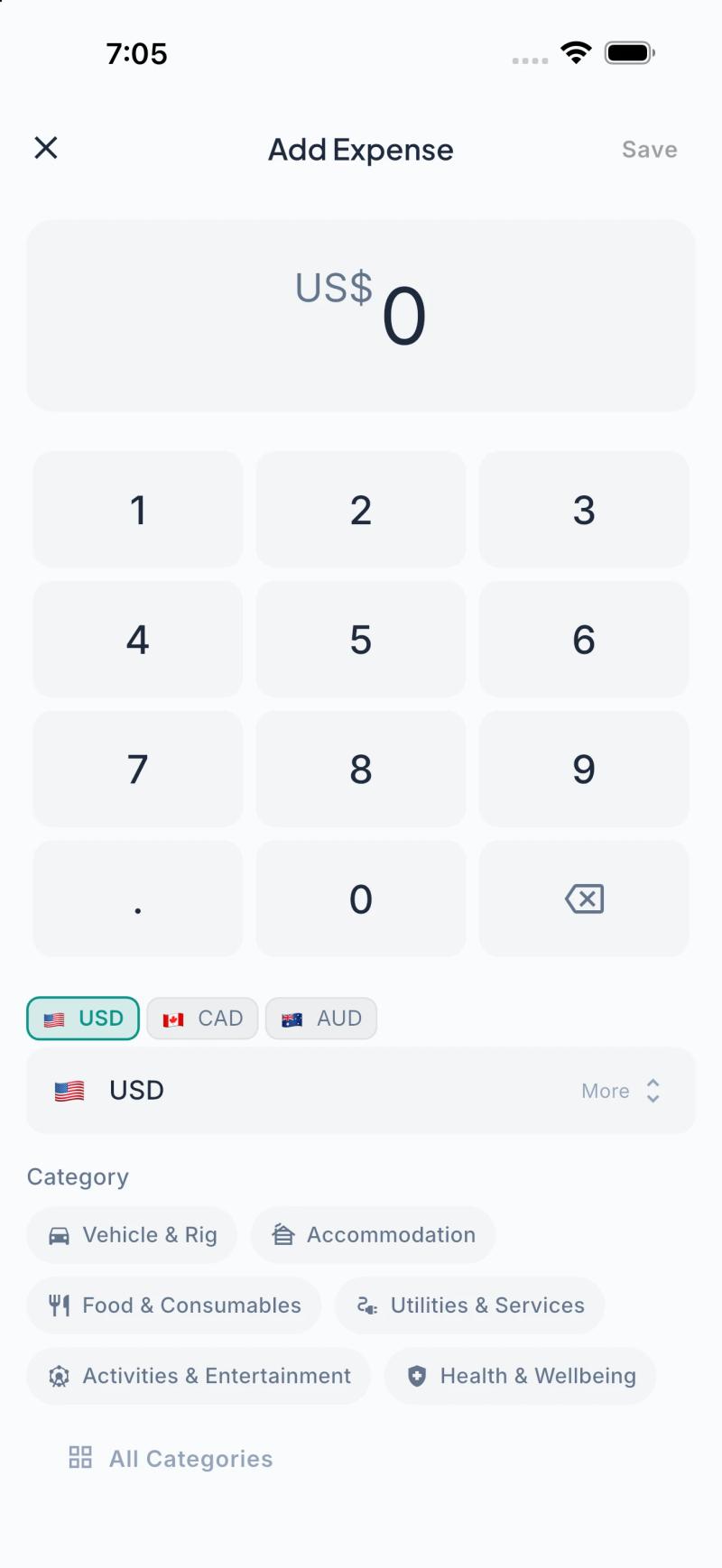
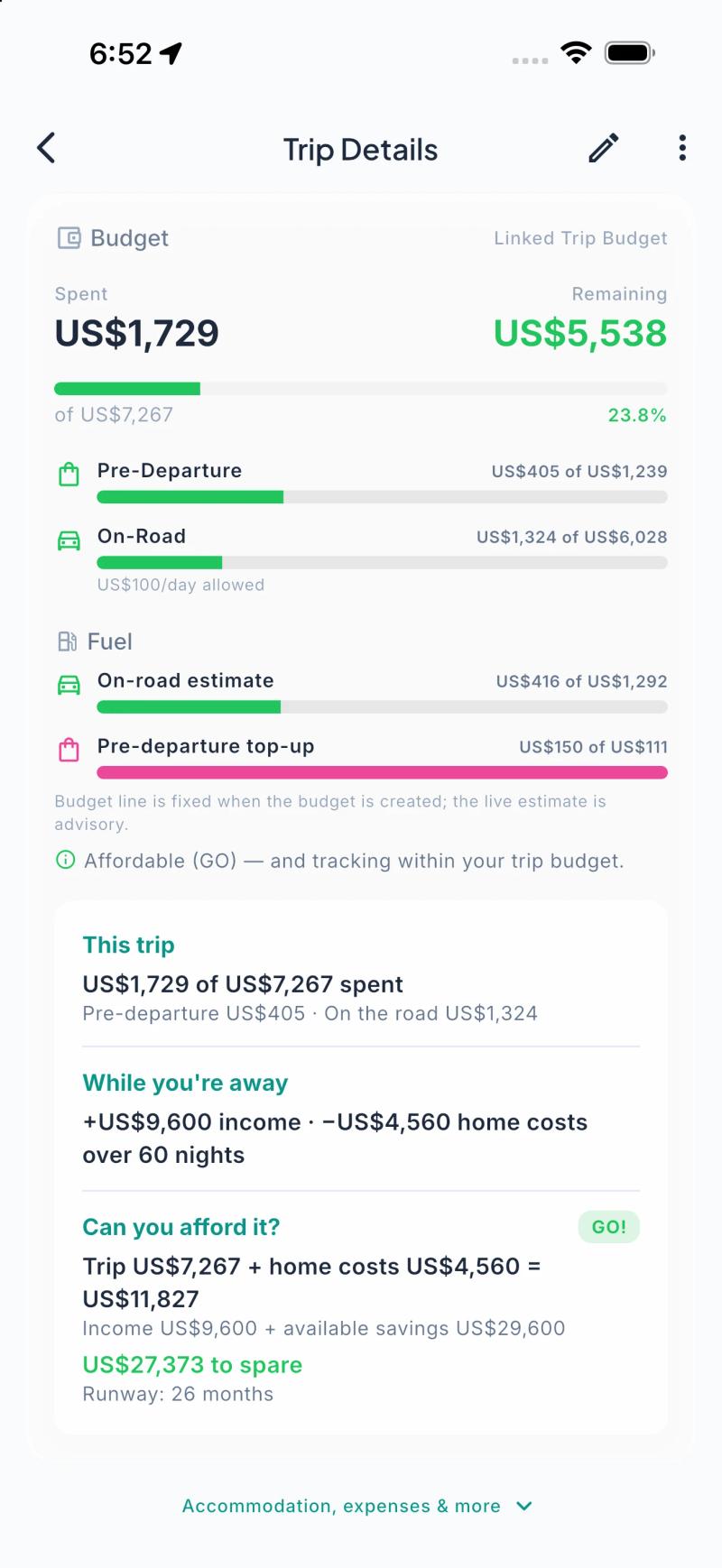
Ready2Roam was built around the question most travel apps skip: can you afford the trip?
- Build your trip budget with your real costs, including what you'll keep paying at home. Nomad Pro adds a clear Go / No-Go and your savings runway before you commit.
- Multi-currency tracking. Log expenses in the currency you paid and see your spending converted to your home currency. It works offline too.
- Receipt scanning (Nomad Pro) turns a photo of a receipt into an expense in seconds.
- Plan vs actual shows how your spending compares with your budget, by category, as you go.
The budget builder, expense tracking and multi-currency are free. Nomad Pro adds Go / No-Go, receipt scanning, AI budget analysis, unlimited trips and more.
The bottom line
A cross-border RV trip is one of the great North American adventures. Budget in the currency you'll spend, convert with a buffer, include your costs at home, check your insurance and requirements, and track every expense in both currencies. Then the only surprise will be how good the weather is.
More on budgeting: the RV trip budgeting mistakes we see most, and our guide to free camping on US public lands, which can help stretch a budget.
Download Ready2Roam and build your trip budget. It's free.


