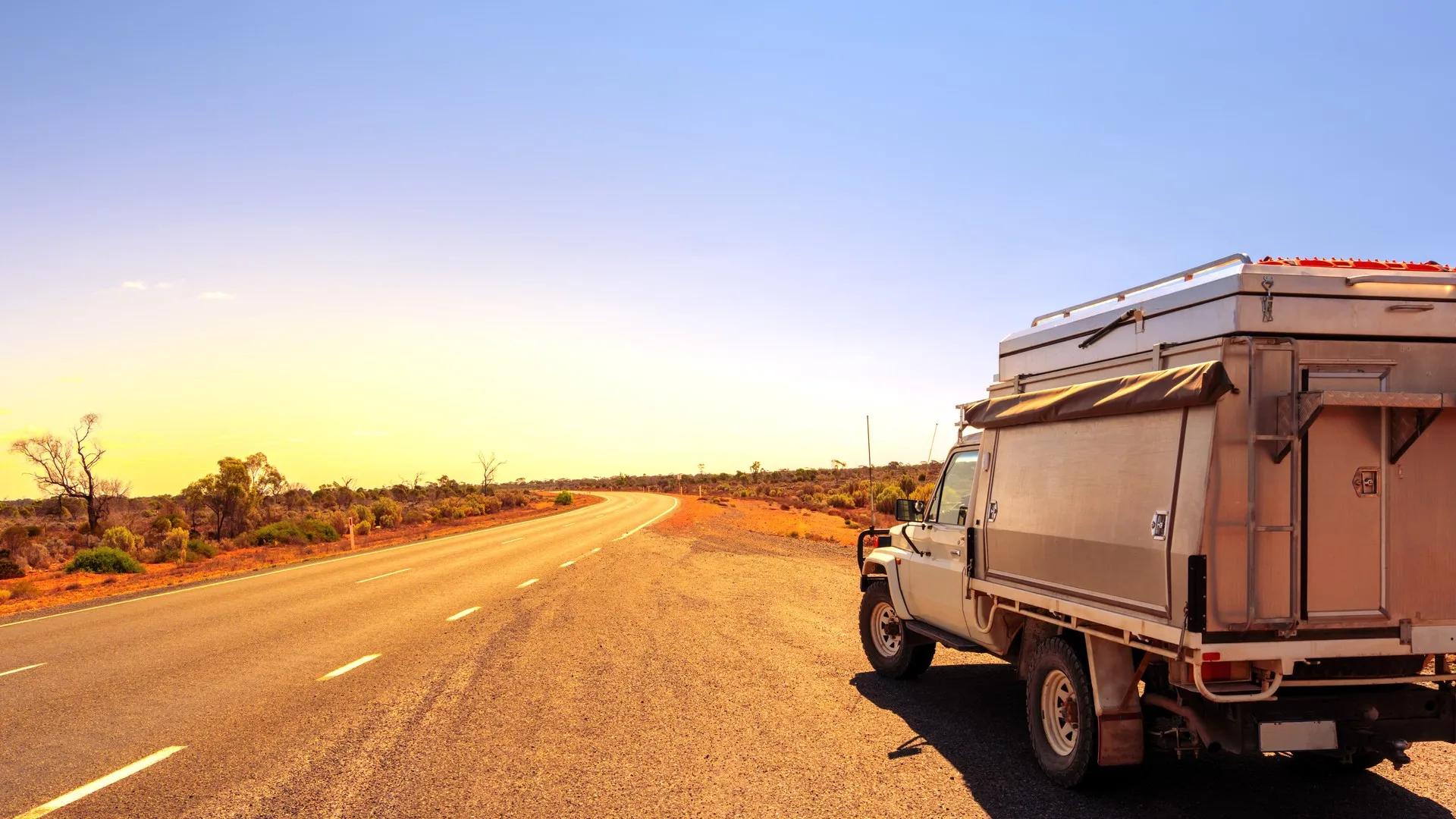
America has a camping secret hiding in plain sight: hundreds of millions of acres of public land where you can park your RV and camp for free. No reservations, no fees, no crowds. The catch is knowing where to find it, what the rules are, and whether your rig can actually get there.
This guide covers the three main sources of free and low-cost RV camping on US public lands: BLM (Bureau of Land Management), National Forests, and Army Corps of Engineers sites.
BLM Dispersed Camping — The Real Free Camping
BLM manages around 245 million acres of public land, primarily in the western states — Arizona, Nevada, Utah, California, Oregon, Idaho, Montana, Wyoming, Colorado, and New Mexico. Most of this land is open to dispersed camping — meaning you can camp outside of designated campgrounds, with no reservation, no fee, and often no facilities.
The standard rules across most BLM land are straightforward. Stay limit is 14 days in any 28-day period within a 25-mile radius, though some areas have different limits — check the local field office. Camp at least 100 feet from water sources. Pack out everything you pack in. Use existing fire rings where available and check current fire restrictions before lighting anything. Generator hours are typically 6am–10pm.
The catch is finding specific spots. BLM doesn’t publish a map of “camp here” locations. The land is open, but not all of it is accessible by road, flat enough to park on, or suitable for a large rig.
National Forest Camping
National Forests offer both developed campgrounds (typically $10–30/night, many reservable through Recreation.gov) and dispersed camping areas (free, first-come first-served). The US has 154 National Forests covering 193 million acres.
Dispersed camping rules in National Forests generally mirror BLM: 14-day stay limit, pack in/pack out, 100 feet from water. Some forests have designated dispersed camping corridors marked with white-tipped posts. Check the specific forest’s Motor Vehicle Use Map (MVUM) — if a road isn’t on the MVUM, you can’t drive on it.
The advantage of National Forest dispersed camping over BLM is that forest sites are often more sheltered, have tree cover, and are spread across a wider geographic range — including the eastern US where BLM land barely exists.
Army Corps of Engineers Sites
The Army Corps of Engineers operates over 400 recreation areas at lakes and waterways across the country. These aren’t free — typical rates are $15–35/night — but they’re often significantly cheaper than comparable private campgrounds and include amenities like electric hookups, water, dump stations, and boat ramps.
Army Corps sites are particularly strong in the central and eastern US where BLM and National Forest options are limited. Many are lakeside, well-maintained, and surprisingly uncrowded on weekdays. They’re bookable through Recreation.gov.
Harvest Hosts — Not Free, but Clever
Harvest Hosts offers overnight stays at wineries, farms, breweries, and other unique locations across the US and Canada. Membership runs around $99/year. You don’t pay a nightly fee — instead, you’re expected to support the host by purchasing their products.
The real value isn’t just the free camping — it’s the experience. Parking your RV at a vineyard in Napa Valley or a lavender farm in Oregon is a fundamentally different night than pulling into a Walmart parking lot.
Finding the Right Site for Your Rig
The biggest challenge with dispersed camping is knowing whether a site will work for your specific rig before you drive there. A 40-foot fifth-wheeler has very different access requirements than a 20-foot campervan. Forest service roads vary from smooth gravel to boulder-strewn tracks.
This is where trip planning tools make the difference. Rather than arriving at a dirt road entrance wondering if your rig will fit, check dimensions and access ratings before you commit. Know your rig’s length, height, and turning radius — and match them against what the site can handle.
Ready2Roam maps BLM dispersed camping areas, National Forest sites, Army Corps campgrounds, and Harvest Hosts locations across the US. Filter by site type, facilities, and rig fit — and see how each stop affects your overall trip budget. The difference between a week of $50/night campgrounds and a week of free dispersed camping on BLM land is $350 back in your pocket.
Essential Tips for First-Time Boondockers
Arrive during daylight. Finding and evaluating a dispersed site in the dark is frustrating at best and dangerous at worst.
Carry enough water. Most dispersed sites have no water supply. Plan for 5–10 gallons per person per day minimum.
Know your power budget. Without hookups, you’re running on batteries and solar. Understand your daily power consumption before you leave.
Download offline maps. Cell coverage at dispersed camping sites ranges from “one bar if you hold your phone at arm’s length” to “absolutely nothing.” Download the area before you arrive.
Leave it better than you found it. Dispersed camping works because people respect the land. Pick up trash — even if it isn’t yours. It’s how we keep these sites available for everyone.