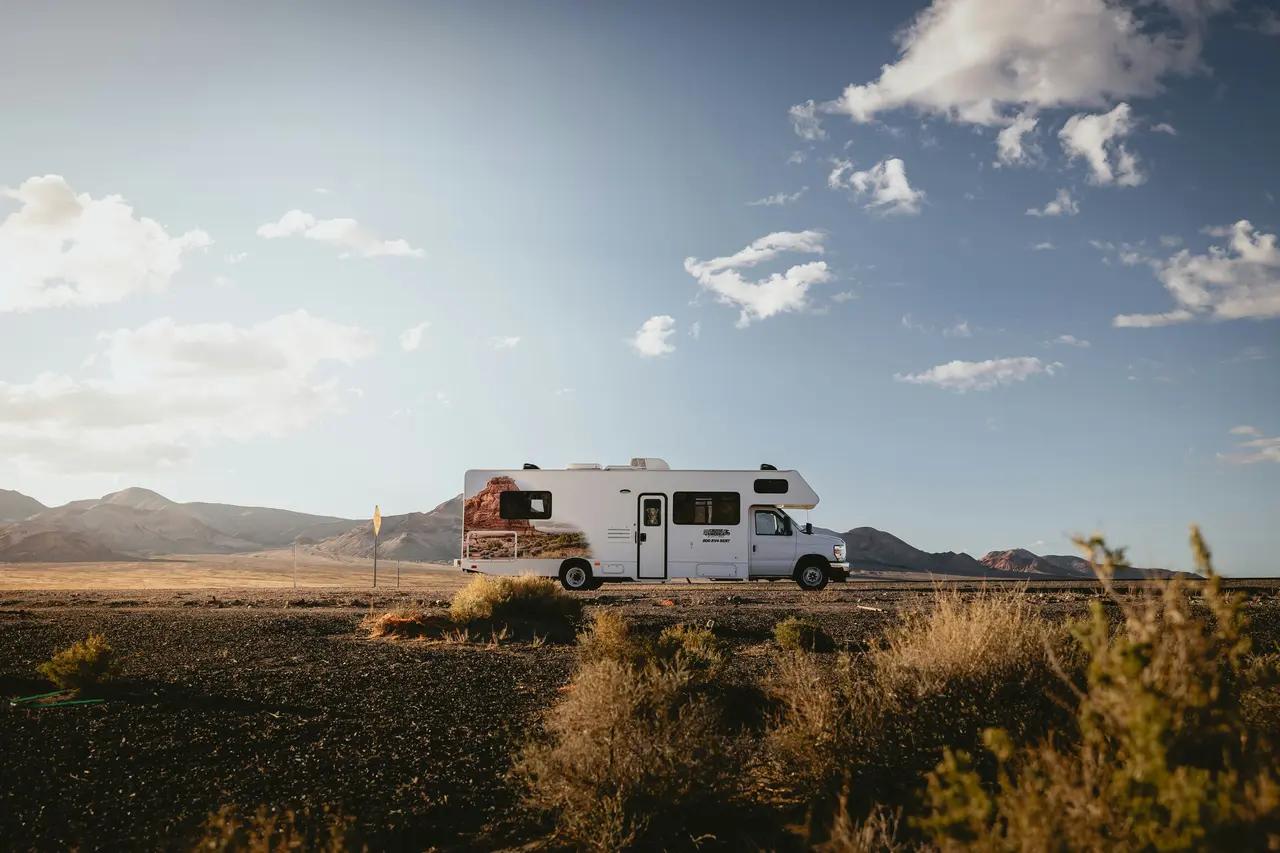
Boondocking — camping without hookups, usually for free, on public land — is one of the best-kept advantages of RV travel in the United States. While campground fees climb past $50 and $60 per night, millions of acres of BLM and National Forest land sit empty, free, and legal to camp on. The trade-off is self-sufficiency: no water hookup, no electric, no dump station, and often no cell signal. For a lot of people, that’s not a trade-off at all — it’s the entire point.
This guide covers the practical side of getting started with boondocking, from finding spots to managing your resources.
Where Can You Actually Boondock?
The main sources of free camping in the US are Bureau of Land Management (BLM) land and National Forest dispersed camping areas. BLM manages roughly 245 million acres, mostly in the western states — Arizona, Nevada, Utah, California, Oregon, Idaho, Montana, Wyoming, Colorado, and New Mexico. National Forests add another 193 million acres across a broader geographic range.
The general rule on both BLM and National Forest land is that you can camp for up to 14 days in any 28-day period within a 25-mile radius. Camp at least 100 feet from water sources, use existing fire rings, and pack out everything you bring in. Some areas have additional restrictions — always check with the local ranger district or field office before you set up.
Not all public land allows camping. Wilderness areas, wildlife management zones, and land near developed recreation sites often have specific restrictions. Look for signage, check the Motor Vehicle Use Map for National Forests, and when in doubt, call the local office. A 5-minute phone call beats a $250 fine.
Finding Your First Spot
The challenge with boondocking isn’t legality — it’s discovery. There’s no central database of “camp here” coordinates. Experienced boondockers use a combination of satellite imagery, GPS coordinates from community databases, word of mouth, and plain exploration.
Start with areas you know are open: the Arizona BLM land south of Quartzsite, the Coconino National Forest near Sedona, BLM land near Moab, or National Forest roads in Colorado and Oregon. These are well-known boondocking areas with established sites that are easy to find and evaluate.
For your first few times, choose spots close to a town with services. Running out of water 80 miles from the nearest fill station is a hard lesson. Build your confidence and learn your rig’s resource limits in forgiving terrain before venturing into truly remote areas.
Water Management
Water is the resource that determines how long you can stay out. Most RVs carry 30–80 gallons of fresh water. A couple using water carefully — short showers, efficient dishwashing, no outdoor hose use — can make 40 gallons last 4–5 days. Use it carelessly and 80 gallons disappears in two days.
Know your consumption before you leave. Fill your tank at home, don’t refill, and see how many days you last with normal use. That number is your baseline. Boondocking extends it by forcing awareness, but you need to know where you’re starting from.
Water fill stations exist at many gas stations, RV dump stations, and sometimes at the entrance to public recreation areas. Carry a water filter if you plan to fill from non-potable sources. A 5-gallon collapsible jug is useful for topping off from sources too far to drive to.
Power Without Hookups
Your power system determines your comfort level. At minimum, you need to know your battery capacity (in amp-hours), your daily power consumption, and your recharging capability.
A typical RV with two 100Ah lithium batteries has roughly 200Ah of usable capacity. Running the fridge (5–8A continuous), charging phones and laptops (2–3A), LED lights (1–2A), and occasional water pump use consumes 40–60Ah per day. Without recharging, that’s 3–4 days of power.
Solar panels are the most common recharging method for boondockers. A 200W solar setup on a sunny day in the desert generates roughly 60–80Ah — enough to offset daily consumption and keep you going indefinitely. Cloudy days, winter sun angles, and shade reduce output significantly. A portable generator is the backup option, but noise restrictions (typically 6am–10pm) and courtesy to neighbours apply.
Waste Management
No hookups means no sewer connection. Your grey tank (sink and shower water) and black tank (toilet) fill up, and you need to drive to a dump station to empty them. Free dump stations exist at many rest areas, some gas stations, and recreation area entrances. Paid stations at RV parks typically charge $10–25.
Conserving grey water extends your boondocking time more than conserving fresh water does, because the grey tank fills faster than the fresh tank empties. Use a basin for dishwashing, take efficient showers, and know your tank levels.
Etiquette That Keeps Boondocking Legal
Boondocking on public land is a privilege maintained by collective behaviour. When sites get trashed, agencies close them. When campers overstay, rules get stricter. When generators run all night, complaints lead to new restrictions.
Leave every site cleaner than you found it. Respect the 14-day limit. Keep generator hours reasonable. Don’t dump grey water on the ground — even if you think nobody’s watching. Don’t create new fire rings. Don’t cut or damage vegetation. And give other campers space — if the area feels full, find another spot rather than crowding in.
Planning Makes the Difference
The best boondockers know their rig, know their resources, and know their destinations before they arrive. Ready2Roam maps BLM dispersed camping areas, National Forest sites, and dump stations across the US, with rig-fit filtering so you know whether your specific RV can access a site before you commit. Budget planning with per-stop cost comparison shows exactly how much you save by boondocking versus paid campgrounds — and over a multi-month trip, those savings add up to thousands.